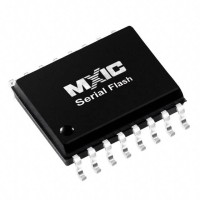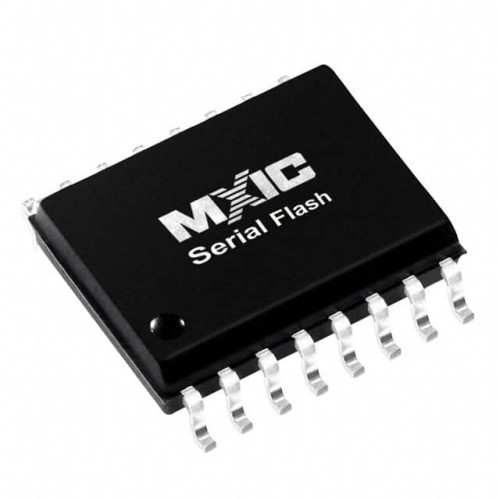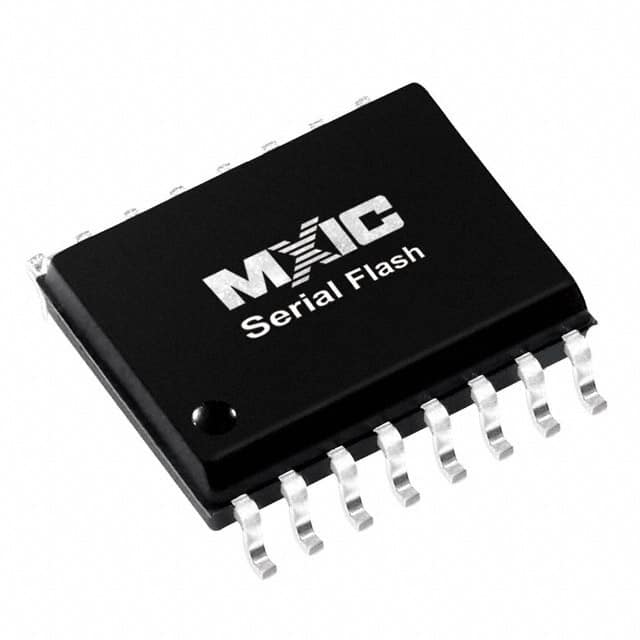
The component in question, the MX25L3206EMI-12G from Macronix, belongs to the category of Serial NOR Flash memory. Its fundamental role in electronic systems is to provide non-volatile, reliable code storage. Unlike NAND Flash, which is optimized for high-density data storage, Serial NOR Flash excels at executing code directly from the chip—a capability known as eXecute-In-Place (XIP). This makes it the go-to memory for boot firmware, configuration parameters, and firmware updates in a vast array of embedded systems, from networking equipment and IoT devices to industrial controllers and consumer electronics. The 32Mbit (4MB) density is a classic sweet spot for boot loaders, operating system kernels, and critical application code.
When selecting a Serial NOR Flash component, several key parameters must be carefully weighed. Interface speed is paramount; the MX25L3206EMI-12G supports a maximum SPI clock frequency of 86MHz, which translates to a theoretical throughput of 86 Mbps in single I/O mode, and significantly higher with its Quad SPI (QSPI) support, which can read four bits per clock cycle. Operating voltage is another critical factor—this part is specified for a 2.7V to 3.6V range, making it suitable for 3.3V logic systems. Package type is equally important; the 16-pin SOP (Small Outline Package) is a through-hole or surface-mount option that balances ease of assembly with board space efficiency. Other parameters include erase and program times, endurance (typically 100,000 program/erase cycles for this class), and data retention (often 20 years). The operating temperature range also matters—this variant is industrial-grade (-40°C to +85°C), which is essential for many industrial and automotive applications.
Comparing this component to alternatives reveals a nuanced trade-off landscape. Performance-wise, the MX25L3206EMI-12G is a strong mid-range option. It competes directly with parts like the Winbond W25Q32JV and the Microchip SST26VF032B. In terms of raw throughput, all three offer similar 86MHz to 104MHz clock speeds and Quad SPI support. However, the Macronix part often shows slightly faster erase and program times in benchmarks, particularly for sector erase operations. Cost is where the balance tilts; Macronix generally positions itself as a competitive, volume-driven supplier, often offering pricing that is slightly below Winbond for equivalent densities, especially in the 16- and 32-Mbit range. Microchip’s parts, while highly reliable, tend to carry a price premium due to their broader distribution and support ecosystem. Availability has been a major differentiator in recent years; Macronix has maintained better supply stability compared to some competitors, particularly during the semiconductor shortages of 2021-2023, thanks to its focused production capacity on NOR Flash.
Several industry trends are reshaping this component category. The most significant is the shift toward higher-density Serial NOR Flash as firmware bloat increases and security features like secure boot and encrypted storage require more space. While 32Mbit was once standard, 64Mbit and 128Mbit parts are now common. Another trend is the adoption of Octal SPI interfaces, which offer double the throughput of Quad SPI, though this requires more sophisticated memory controllers. The rise of Automotive Grade and Industrial IoT applications is driving demand for extended temperature ranges and higher reliability, which the industrial-grade MX25L3206EMI-12G satisfies. Furthermore, the push toward smaller packages like WSON and USON is increasing, but the 16SOP remains popular for designs where thermal performance or manual assembly is a priority.
You should choose this specific component over alternatives when your design requires a proven, reliable workhorse for code storage in a 3.3V system with moderate throughput demands. It is an excellent choice for boot flash in microcontrollers (like STM32 or NXP i.MX RT series) or FPGAs, where Quad SPI is supported and fast read speeds are beneficial. If your application does not require the absolute highest speed (above 86MHz) or the smallest footprint (like a 8-pin DFN), this part offers an optimal balance of performance, cost, and ease of design-in. It is also a strong candidate for second-source strategies where pin-compatible alternatives from Winbond or Microchip exist, allowing for flexible sourcing. Avoid it if your design demands higher density, lower voltage (1.8V), or requires the very latest Octal SPI interface.
From a procurement perspective, several factors are critical. Lead times for the MX25L3206EMI-12G have stabilized post-pandemic, typically ranging from 8 to 14 weeks for standard orders, though custom or large-volume requests may extend to 20 weeks. The lifecycle status is currently Active, with no imminent end-of-life signals from Macronix, which is a strong positive for long-term design commitments. However, always verify with the manufacturer or distributor for the latest PCN (Product Change Notification) status. Second-source options are abundant: the Winbond W25Q32JVSSIQ and Microchip SST26VF032B-104I/SM are pin-compatible and functionally equivalent, though firmware may require minor adjustments for status register handling or proprietary commands. For procurement, consider volume pricing tiers; this part sees significant reductions at 1k and 10k quantities. Also, be aware of counterfeit risks—purchase only from authorized distributors like Mouser, DigiKey, or directly from Macronix. Finally, account for moisture sensitivity level (MSL)—this package is typically MSL-3, requiring proper storage and baking before reflow soldering if exposed to ambient humidity for extended periods.