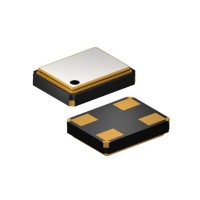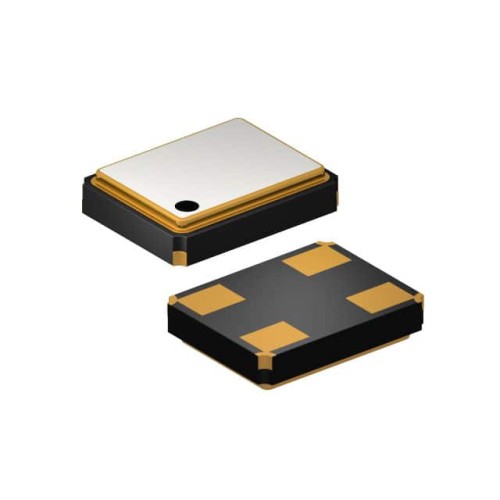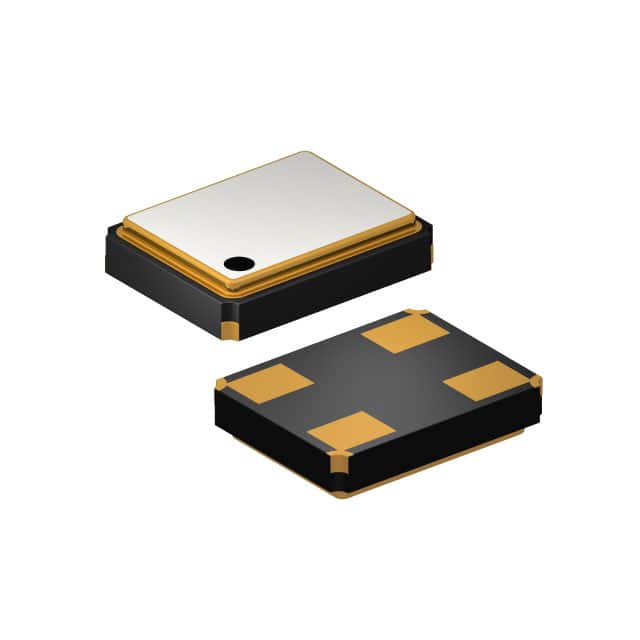
When evaluating the reliability and quality of the CRYSTAL 27.0000MHZ 18PF SMD (Suntsu SXT32418CB17-27.000MT), the first critical area is its adherence to established reliability standards and qualifications. This component is typically manufactured in compliance with AEC-Q200 (for automotive applications) or industrial-grade standards such as JIS C 6701 and IEC 60122. These standards define rigorous testing for mechanical shock, vibration, solderability, and temperature cycling. For Suntsu’s SXT324 series, you should request a certificate of conformance verifying that the lot meets RoHS and REACH requirements, as well as any specific MSL (Moisture Sensitivity Level) rating, typically MSL 1 for hermetically sealed ceramic packages.
Accelerated life testing (ALT) is essential to predict long-term performance. For quartz crystal resonators, the predominant failure mechanism is aging due to mass transfer on the electrode surface or contamination. ALT is often performed at elevated temperatures (e.g., 85°C to 125°C) with continuous oscillation for 1,000 to 2,000 hours. Results are expressed as frequency drift in parts per million (ppm). A pass criterion is typically less than ±5 ppm drift after 1,000 hours at 85°C. This data is critical for estimating activation energy and extrapolating to use conditions. For this 27 MHz crystal, a stable aging profile indicates that the quartz blank and electrode material (typically silver or gold) are of high purity.
Failure rate calculations for crystals are expressed in FIT (Failures In Time) rates, representing the number of failures per billion device-hours. For high-quality SMD crystals like the SXT32418CB17, typical FIT rates are in the range of 1 to 10 FIT at 40°C with 0.5W applied power. This corresponds to a MTBF (Mean Time Between Failures) of 100 million to 1 billion hours. However, it is critical to note that MTBF is a statistical projection based on constant failure rates during the useful life period, not a guarantee. The failure rate model often used is MIL-HDBK-217F for quartz crystals, which factors in temperature, vibration, and quality level. For reliable procurement, request a FIT/MTBF report from Suntsu that specifies the test conditions and confidence level (e.g., 60% or 90%).
Environmental stress screening (ESS) and burn-in procedures are vital to eliminate infant mortality failures. For crystals, burn-in is typically performed at 85°C ± 2°C for 168 hours under continuous oscillation at nominal voltage. This process accelerates outgassing and stabilizes the crystal’s frequency. ESS may also include temperature cycling from -40°C to +85°C for 100 cycles, followed by a 24-hour recovery period and final frequency measurement. Any crystal that deviates more than ±10 ppm from initial value should be rejected. A robust manufacturer will perform 100% burn-in and provide test data for each lot, including equivalent series resistance (ESR) and load capacitance (18 pF) verification.
Counterfeit detection for SMD crystals requires specialized techniques due to their small size and passive nature. The most common counterfeits involve relabeled or substandard quartz blanks. A key method is X-ray fluorescence (XRF) analysis to verify the electrode material composition (e.g., silver content) and the absence of lead or other restricted substances. Scanning acoustic microscopy (SAM) can detect internal delamination or voids in the ceramic package. Additionally, perform frequency response analysis using a network analyzer to measure the unwanted spurious modes; genuine crystals have a clean resonance with no significant spurs within ±10% of the fundamental frequency. Compare the marking permanency and laser engraving quality against known genuine samples. A simple but effective check is to weigh the component; counterfeit units often use lighter, lower-grade materials.
Incoming inspection best practices should follow a documented sampling plan (e.g., ANSI/ASQ Z1.4, AQL 0.65). For each lot, verify the frequency accuracy at 25°C ± 2°C using a calibrated frequency counter with an accuracy of ±0.1 ppm. Measure equivalent series resistance (ESR) to ensure it is below the datasheet maximum (typically 60 ohms for a 27 MHz fundamental mode). Also check load capacitance (18 pF) by measuring the frequency with a known series capacitor. Inspect for physical defects: cracks, chips, or contamination on the ceramic lid, and ensure the solder pads are flat and free of oxidation. Perform a solderability test per J-STD-002 to guarantee reliable reflow attachment. Document all results and reject any lot with more than 2% non-conformance.
Storage and handling requirements are critical to maintain the crystal’s reliability. These SMD crystals are hermetically sealed, but they are still susceptible to mechanical shock and static discharge. Store in an ESD-safe environment, preferably in original anti-static trays or reels. The recommended storage temperature is 15°C to 35°C with relative humidity below 60%. Avoid exposure to strong magnetic fields which can affect the quartz oscillation. For long-term storage (over one year), consider using a nitrogen-purged cabinet to prevent oxidation of the silver electrodes. When handling, use vacuum tweezers or ESD-safe tools to avoid scratching the package. Do not exceed a drop height of 30 cm, as the crystal’s mechanical structure is fragile.
End-of-life (EOL) management and obsolescence planning for this specific crystal require proactive strategies. Suntsu Electronics, Inc. typically provides product lifecycle notifications with a minimum of 12 months’ notice before discontinuation. Maintain a last-time buy (LTB) inventory buffer covering at least 18 months of projected demand. For critical designs, consider cross-referencing to equivalent parts from other manufacturers (e.g., ECS, TXC, or Abracon) with identical 27.0000 MHz, 18 pF load, and package dimensions (3.2 x 2.5 mm). Perform a qualification test on any alternative part to confirm frequency stability and aging characteristics match the Suntsu unit. Additionally, implement a design-for-obsolescence (DFO) strategy by using a socket or programmable oscillator that can be reconfigured if the specific crystal becomes unavailable. Regularly review the component obsolescence database (e.g., IHS Markit or SiliconExpert) to monitor the status of the SXT32418CB17-27.000MT.