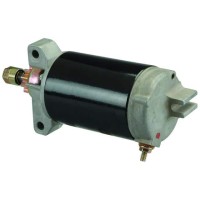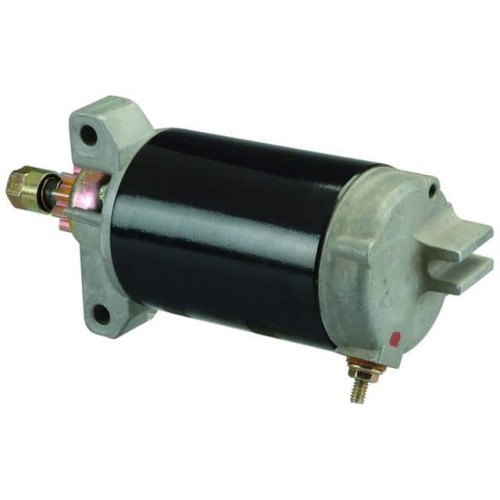
When designing a replacement circuit for the Mercury 60ELPTO outboard motor ignition or charging system using the Interlight WX-Y28S-1 component, it is critical to first understand that this component is typically a high-voltage rectifier or a voltage regulator-rectifier module. You must verify the exact function of the original part by consulting the Mercury service manual, as misapplication can lead to immediate failure. The most common topology for such replacements is a three-phase full-wave bridge rectifier with a shunt or series voltage regulator, depending on whether the original system used a permanent magnet alternator (PMA) or a field-excited alternator. For PMA systems, a shunt regulator is standard, where excess energy is dissipated as heat. For best performance, use a six-diode bridge configuration with Schottky diodes for lower forward voltage drop, which reduces thermal stress and improves efficiency at low RPM. Ensure the replacement module’s DC output is properly filtered with a low-ESR electrolytic capacitor (typically 2200–4700 µF at 35–50 V) placed as close to the output terminals as possible to suppress ripple and protect downstream electronics like the ECU or battery charger.
Component selection for supporting passives must prioritize thermal and voltage margins. For the rectifier diodes, choose devices rated for at least 200 V reverse voltage (to handle alternator voltage spikes) and a forward current of 30–50 A, such as the Vishay VS-30CTQ200 or equivalent. The regulator’s voltage reference and pass transistor must be rated for the full alternator power, which on the 60ELPTO can exceed 20 A at high RPM. Use a shunt regulator like the LM338 or a dedicated automotive-grade IC (e.g., TL431 with a power Darlington) that can sink at least 25 A. The filter capacitor should have a ripple current rating of at least 2–3 A RMS to avoid overheating; use a snap-in aluminum electrolytic with a 105°C rating. For the field coil drive (if applicable), select a MOSFET with Vds ≥ 60 V and Rds(on) < 10 mΩ, such as the IRFZ44N, with a gate driver that includes a Zener clamp to prevent overvoltage. All high-current traces should be sized for at least 10 A/mm², and use 2 oz copper on the PCB to minimize resistive losses.
PCB layout is dominated by thermal management and noise reduction. Place the rectifier and regulator on a dedicated heat sink with thermal interface material, and ensure the PCB has a large copper pour area for heat spreading. Use a star-ground topology: connect the alternator ground, battery negative, and load grounds at a single point to avoid ground loops that cause erratic regulator behavior. Route high-current AC input traces (from the outboard’s stator) as short, wide tracks (at least 5 mm wide) directly to the rectifier bridge. Keep the DC output traces separate from AC paths to prevent inductive coupling. For the filter capacitor, place it within 10 mm of the rectifier output to minimize ESL (equivalent series inductance) and reduce voltage spikes. Use a ground plane on the bottom layer for the control electronics but do not connect it directly to the high-current ground; instead, connect them via a single via near the regulator feedback pin. Avoid running sensitive feedback traces near the stator wires; if unavoidable, use a guard trace connected to ground.
EMC/EMI considerations are paramount due to the outboard’s high-voltage ignition noise and alternator harmonics. The alternator’s output is inherently noisy, with strong 180 Hz ripple (for three-phase) and high-frequency spikes from the ignition coil. Place a 0.1 µF ceramic capacitor (rated 250 V) across each diode in the bridge to snub reverse recovery ringing. Add a common-mode choke (e.g., 10 mH at 20 A) on the DC output line to suppress conducted emissions. For radiated EMI, enclose the module in a grounded metal shield, or use a PCB with a continuous copper pour on the top layer connected to the chassis ground via a low-inductance path. Ensure the ignition kill switch circuit is isolated with a 10 kΩ resistor and a 0.01 µF capacitor to prevent false triggering. Use ferrite beads on the alternator phase wires (e.g., 100 MHz impedance of 100 Ω) to dampen high-frequency noise. Avoid running the output wiring parallel to the spark plug leads; if necessary, use twisted-pair wiring for the DC output to cancel magnetic fields.
Common design pitfalls include overvoltage stress from alternator overspeed. The Mercury 60ELPTO can produce over 80 VAC at high RPM when the battery is disconnected, which can destroy under-rated components. Always include a transient voltage suppressor (TVS) diode (e.g., 1.5KE68A) across the DC output. Another frequent error is inadequate heatsinking: the shunt regulator must dissipate up to 200 W at high RPM, so use a heat sink with a thermal resistance below 0.5°C/W and forced air cooling if enclosed. Do not omit the filter capacitor; even a brief open circuit can cause regulator oscillation. Avoid using a series regulator directly without a shunt stage, as it may not handle the full alternator current at low RPM. Ensure all connections to the outboard’s wiring harness are sealed with marine-grade connectors and dielectric grease to prevent corrosion, which can cause intermittent faults.
For prototyping and bench testing, begin with a low-voltage simulation. Use a variable 50 V 30 A DC supply to test the regulator’s setpoint and current sinking capability before connecting to the actual alternator. Measure the ripple voltage at the output with a 10 µF ceramic and 1000 µF electrolytic load; it should be under 100 mV peak-to-peak at 20 A. Then, test with a 12 V battery and a resistive load bank (e.g., 0.5 Ω, 200 W) to verify thermal performance. Use an oscilloscope with a differential voltage probe to check for oscillation on the regulator feedback loop; add a 100 pF capacitor from the feedback pin to ground if ringing exceeds 50 mV. Finally, bench-test the full system with a variable-speed alternator (e.g., a belt-driven automotive alternator) to simulate the outboard’s RPM range from 600 to 6000 RPM. Monitor the heatsink temperature with a thermocouple; if it exceeds 100°C, increase heatsink size or add a fan. Always use a current probe on the battery cable to ensure the regulator is not overcharging: the steady-state voltage should be 14.2–14.8 V at full load. Document all waveforms and thermal data for the final application note.