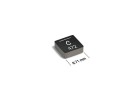
The Artaflex Inc. AW24TH-C-SM, specifically identified by SKU AW24TH-C-SM, is a surface-mount (SMD) radio frequency (RF) transceiver module that operates on the IEEE 802.15.4 protocol. This places it squarely in the category of low-power, short-range wireless communication modules, most commonly associated with Zigbee, Thread, and other mesh networking applications. Its core role in an electronic system is to provide a complete, pre-certified wireless link, handling the complex RF front-end, baseband processing, and media access control (MAC) layer functions. For a product designer, this module abstracts away the challenging RF layout and antenna tuning, allowing a focus on the application-layer firmware. It essentially acts as the wireless nervous system for devices in the Internet of Things (IoT), enabling sensors, actuators, and controllers to form reliable, self-healing networks.
When selecting an 802.15.4 module like the AW24TH-C-SM, several key parameters demand close scrutiny. Transmit power and receiver sensitivity are the primary determinants of range and link robustness. The AW24TH-C-SM typically offers a transmit power of around +8 dBm and a sensitivity of approximately -97 dBm, which is competitive for indoor use. Current consumption is critical for battery-powered designs; look for deep-sleep current figures in the microamp range and active receive/transmit currents. Processor and memory are often overlooked but vital. Some modules integrate a microcontroller (MCU) running the Zigbee or Thread stack, while others, like this one, may require an external host MCU. The AW24TH-C-SM is a network co-processor, meaning it handles the radio and low-level protocol, communicating with a host MCU via UART or SPI. Antenna type is another binary choice: this module uses an integrated chip antenna, which simplifies design and reduces BOM cost but offers less flexibility and typically lower gain than an external antenna connector. Protocol stack support (Zigbee 3.0, Thread, or proprietary) and certification (FCC, CE, IC) are non-negotiable, as they directly impact time-to-market and regulatory compliance.
Comparing the AW24TH-C-SM to its alternatives reveals clear trade-offs. A primary alternative is a module with an external antenna connector, such as the Microchip MRF24J40MA (which uses a u.FL connector). The Artaflex module’s integrated chip antenna offers a clear advantage in cost and board space, as it eliminates the need for a separate antenna component, a connector, and the associated RF design work. However, the performance is generally inferior: a chip antenna is more susceptible to detuning from the surrounding PCB ground plane, enclosure, and other components, and its gain is often 2-3 dB lower than a simple PCB trace or monopole antenna. This translates to shorter range and less reliable connections in dense environments. In terms of cost, the AW24TH-C-SM is a strong contender for high-volume, cost-sensitive applications where the extra range is not needed. Availability for the Artaflex part is generally good through major distributors like DigiKey and Mouser, but it is not as ubiquitous as modules from Silicon Labs or Microchip. Another alternative is a module with an integrated MCU, like the Silicon Labs MGM210P. This consolidates the application processing and wireless stack into one component, reducing PCB area and system cost. The AW24TH-C-SM, being a co-processor, requires an external host MCU, which adds cost and complexity but offers more flexibility in choosing the application processor and allows for a cleaner separation of concerns in the firmware architecture.
Several industry trends are shaping the landscape for 802.15.4 modules. The most significant is the convergence of Zigbee and Thread under the Matter standard. Matter uses Thread as one of its primary wireless transport layers, which is built on 802.15.4. This has dramatically increased demand for 802.15.4 modules that can support Thread. Many new designs are now targeting Matter compliance, which requires modules with sufficient flash and RAM to run the Thread stack alongside the application. Another trend is the shift toward higher integration, with modules increasingly including not just the radio and MCU, but also power management, security accelerators, and even sensor interfaces. The push for lower power consumption continues, with new modules achieving deep-sleep currents below 1 µA, enabling years of battery life from a coin cell. Finally, supply chain resilience has become a major concern, with buyers actively seeking modules from multiple vendors or those with long-term availability commitments to avoid single-source dependencies.
You should choose the Artaflex AW24TH-C-SM over its alternatives in specific scenarios. Choose it when: your design is extremely cost-sensitive and high-volume; you have limited PCB space and cannot accommodate an external antenna connector; your application requires only modest indoor range (e.g., within a single room or small apartment); you prefer a network co-processor architecture to offload the complex wireless stack from your main application MCU; and you need a module that is already FCC/CE certified to accelerate your time-to-market. It is a poor choice for applications demanding maximum range, such as outdoor sensors or smart agriculture, or for designs that require the lowest possible power consumption, as modules with more advanced sleep modes may outperform it. It is also not ideal for designs that must support the next-generation Matter standard, as its processor may lack the memory and processing power for the full Thread stack needed for Matter certification.
From a procurement perspective, several factors demand attention. The lead time for the AW24TH-C-SM is typically listed as 8-12 weeks from Artaflex, though this can fluctuate based on global semiconductor shortages. It is advisable to maintain a rolling 4-6 month forecast with your distributor to secure allocation. The lifecycle status is currently Active, but as with many modules from smaller manufacturers, you must verify this regularly. Artaflex is not a top-tier vendor like Silicon Labs or NXP, so their commitment to long-term production (10+ years) may be less assured. The most critical procurement consideration is second-source options. There is no direct pin-to-pin second source for this module. The closest alternatives, such as the Digi XBee3 (which is larger and more expensive) or the Microchip RN1810 (which uses an external antenna), would require a complete PCB redesign. This lack of a second source introduces significant supply chain risk. A prudent strategy is to design the PCB with alternate footprints for a module from a major vendor like Silicon Labs (e.g., the MGM210P series) in the same layout, as a contingency. This adds a small amount of design effort but provides a critical escape route if the AW24TH-C-SM becomes unavailable. Always request the latest datasheet and a Certificate of Conformity from Artaflex before committing to a design, and build a strong relationship with your distributor to gain early visibility into any end-of-life notices.