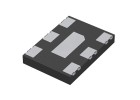
As a quality and reliability engineer, the CreeLED, Inc. XLamp XHP50 Gen 3 (SKU: XHP50D-00-0000-0D0HJ20E1) represents a high-flux-density LED requiring stringent reliability oversight. This guide covers the critical areas for ensuring its dependable performance in professional electronic procurement.
Reliability Standards and Qualifications: This component is typically qualified in accordance with the JEDEC JESD22 series and the LM-80 standard for lumen maintenance. CreeLED publishes LM-80 test data, which is critical for evaluating long-term light output. The device should also meet AEC-Q102 for automotive applications if used in that sector. Key qualifications include moisture sensitivity level (MSL) ratings, typically MSL 2a or 3 for this package, and solder reflow profiles per J-STD-020. Always verify the manufacturer’s latest qualification report for the specific binning code to confirm environmental and mechanical stress tests, such as temperature cycling (-40°C to +125°C) and power cycling.
Accelerated Life Testing (ALT) and Results Interpretation: CreeLED performs accelerated life testing using elevated drive currents and ambient temperatures, often at 85°C and 105°C with nominal current. Results are expressed as L70, L80, or L90 lifetimes, indicating hours until 70%, 80%, or 90% of initial lumen output is maintained. For the XHP50 Gen 3, typical L70 values exceed 50,000 hours at rated conditions. The Arrhenius model is applied to extrapolate failure rates. Pay close attention to the TM-21 projection, which uses the LM-80 data to estimate long-term lumen maintenance. A steep decline in early test data indicates potential design or material weaknesses, such as phosphor degradation or solder joint fatigue.
Failure Rate Calculations (FIT & MTBF): For LED components, traditional FIT (Failures In Time) and MTBF (Mean Time Between Failures) are less straightforward due to wear-out rather than random failure. However, Telcordia SR-332 or MIL-HDBK-217F can be adapted for the driver circuitry. For the LED die itself, random failure rates (catastrophic failures) are extremely low, often <10 FIT under normal conditions. The dominant failure mode is lumen depreciation (wear-out), so MTBF is typically not quoted for the light source alone. Instead, focus on useful life from ALT. For system-level MTBF, incorporate the LED's driver and thermal management. A practical approach is to use the manufacturer’s warranty data and field return rate, which for CreeLED is typically below 50 ppm in the first year.
Environmental Stress Screening (ESS) and Burn-In: Burn-in is critical for early detection of infant mortality, particularly for die attach and wire bond defects. A recommended procedure is a 48-hour burn-in at nominal current and elevated ambient temperature (e.g., 85°C). This should be followed by 100% photometric testing to catch color shift, lumen drop, or voltage anomalies. For higher reliability, a temperature cycling screen from -40°C to +125°C for 20-50 cycles can expose solder joint or substrate cracks. Avoid over-stressing during burn-in, as excessive current can prematurely age the phosphor. Document screen parameters and reject limits for traceability.
Counterfeit Detection Methods: This high-value component is a target for counterfeiting. Key detection methods include: - Visual Inspection: Examine the phosphor coating for unevenness, bubbles, or discoloration. Genuine CreeLED XHP50 Gen 3 has a distinct, uniform yellowish-white dome. Check for laser-marked batch codes that match CreeLED’s format. - X-Ray Fluorescence (XRF): Verify gold wire bond composition (typically 99.99% Au) and lead-free solder composition on the thermal pad. - Electrical Testing: Measure forward voltage (Vf) at nominal current (e.g., 1.0A). Counterfeits often show Vf outside CreeLED’s datasheet tolerance. - Thermal Resistance Testing: Use a transient thermal tester. Genuine parts have a very low thermal resistance (e.g., 0.9°C/W). Counterfeits with poor die attach will exhibit higher values. - UV Fluorescence: Under 365nm UV light, the phosphor of genuine parts fluoresces consistently; counterfeits may show uneven or dull patches. - Supply Chain Verification: Always purchase from authorized distributors. Cross-reference lot codes with CreeLED’s traceability database.
Incoming Inspection Best Practices: Implement a sampling plan per ANSI/ASQ Z1.4 (or equivalent) with a reduced inspection level for trusted suppliers, but perform 100% critical parameter checks on initial lots. Key measurements include: - Luminous Flux (lm) and CCT (Correlated Color Temperature) using an integrating sphere. - Forward Voltage (Vf) at test current. - Thermal Pad Flatness to ensure proper heat sink interface. - Mechanical Dimensions per the datasheet drawing, especially the package height. - ESD Sensitivity Testing: Verify HBM (Human Body Model) rating (typically Class 2, 2000V). Reject any lot with >1% failure. - Data Review: Require a Certificate of Conformance (CoC) and LM-80 data for each bin code.
Storage and Handling Requirements: Adhere strictly to the MSL level. For MSL 2a, exposure time at 30°C/60% RH is limited to 4 weeks. Store in original, sealed moisture-barrier bags (MBBs) with desiccant and humidity indicator cards (HIC). If the HIC shows >20% RH, a bake-out is required at 125°C for 24 hours before reflow. Handle with ESD-safe tweezers and gloves. Avoid mechanical stress on the dome; do not touch the phosphor or lens. Use a nitrogen cabinet for long-term storage to prevent oxidation of the thermal pad. Solder profile must follow CreeLED’s recommendation, with peak temperature typically 260°C for lead-free solder, and avoid rapid cooling.
End-of-Life Management and Obsolescence Planning: CreeLED typically issues Product Change Notifications (PCNs) and End-of-Life (EOL) notices with a minimum 180-day lead time. For the XHP50 Gen 3, plan for design continuity. Key strategies: - Last-Time Buy: Secure a 12-24 month supply for active projects. - Cross-Reference Search: Identify potential replacements from CreeLED’s XP-G or XM-L series, or other vendors, ensuring thermal and optical compatibility. - Qualify a Second Source: Partner with an authorized distributor to maintain stock or use a bridge device (e.g., XHP70.2) with design modifications. - Maintain a Lifecycle Database: Track lot codes and production dates. Monitor CreeLED’s obsolescence alerts quarterly. - Reverse Logistics: Plan for recycling or proper disposal of LEDs containing phosphor (trace rare-earth elements). Ensure RoHS and WEEE compliance for end-of-life waste.
By adhering to these guidelines, the reliability and quality of the CreeLED XHP50 Gen 3 can be maintained throughout its operational life, minimizing field failures and supply chain risks.