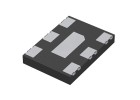
The Suntsu Electronics SXT32416DD38-11.0592MT is a fundamental timing component, and its reliability is paramount for any professional electronic system. This guide provides a comprehensive overview of the quality and reliability considerations for this specific 11.0592 MHz, 16 pF load capacitance, SMD crystal. Adherence to these practices ensures consistent performance and minimizes field failures.
Reliability Standards and Qualifications
This crystal, like most from reputable manufacturers such as Suntsu, is typically designed and manufactured in compliance with industry standards. Key qualifications include RoHS (Restriction of Hazardous Substances) and REACH compliance. Beyond regulatory compliance, look for evidence of qualification testing per standards like IEC 60122, which covers quartz crystal units for frequency control and selection. Key tests include frequency tolerance over temperature, drive level dependency, and long-term aging. A qualified manufacturer will provide a detailed specification sheet and, upon request, a reliability test report showing results for mechanical shock, vibration, and solder heat resistance. The SXT32416DD38 package specifically, as a standard SMD crystal, should meet JEDEC standards for moisture sensitivity level (MSL), typically MSL 1 or 2, depending on the packaging process.
Accelerated Life Testing and Results Interpretation
Accelerated life testing (ALT) is crucial for predicting long-term reliability. For a crystal, the primary failure mechanism is aging, which is a gradual shift in frequency over time due to changes in the quartz blank or the electrode/package interface. ALT is conducted by operating the crystal at elevated temperatures (e.g., 85°C or 125°C) while continuously monitoring its frequency. The results are usually expressed as aging drift in parts per million (ppm) over a specified time, such as ±3 ppm per year at 25°C. A successful ALT will demonstrate that the frequency shift follows a predictable, logarithmic curve, slowing down over time. A sudden, erratic frequency shift during testing would indicate a defect in the crystal blank, contamination, or a poor seal. The Arrhenius equation is used to extrapolate normal-life aging from these high-temperature tests, giving confidence that the crystal will remain within its specified tolerance (e.g., ±10 ppm or ±30 ppm) for years of operation.
Failure Rate Calculations (FIT Rates) and MTBF Considerations
For a passive component like a crystal, the failure rate is often expressed in FIT (Failures In Time), defined as one failure per 109 device-hours. The MIL-HDBK-217 standard is commonly used to calculate FIT rates for crystals. For an SMD crystal like the SXT32416DD38, a typical FIT rate is very low, often in the range of 1 to 10 FIT under standard operating conditions (40°C, nominal voltage). This translates to a Mean Time Between Failures (MTBF) of 100 million to 1 billion hours. It is critical to note that MTBF for a crystal is not a warranty of individual life but a statistical measure of the population. The primary failure modes contributing to FIT are open circuits (due to broken connections or cracked quartz), short circuits (due to contamination or moisture ingress), and frequency drift beyond specification. A well-sealed, hermetically packaged crystal from Suntsu will have a significantly lower FIT rate compared to less rugged packages.
Environmental Stress Screening and Burn-In Procedures
While burn-in is more common for active components, environmental stress screening (ESS) is highly effective for crystals. A typical ESS profile for this SMD crystal includes thermal cycling from -40°C to +85°C for 10 to 20 cycles, with a dwell time at each extreme and a rapid temperature change rate. This stresses the mechanical interfaces and can reveal weak solder joints, internal bond failures, or micro-cracks in the quartz blank. Following thermal cycling, a short vibration test (e.g., 20-2000 Hz, random) can be performed. Burn-in is less standard for crystals but can be implemented by operating the crystal at an elevated temperature (e.g., 85°C) for 48-168 hours while monitoring frequency. This process accelerates early-life failures, particularly those related to contamination or initial aging. The results of ESS should show no frequency change greater than the test limit (e.g., ±5 ppm) and no physical damage.
Counterfeit Detection Methods Specific to This Component Type
Crystals are a common target for counterfeiting due to their simplicity. Detection methods are visual and electrical. Visual inspection is the first line of defense. Examine the laser marking on the top of the SXT32416DD38 package. Authentic Suntsu markings are precise, consistent in font and depth, and free from smudging or rework. Check for any signs of re-tinning or discoloration on the solder pads, which could indicate a reclaimed component. Electrical verification is critical. Use a precision impedance analyzer or a dedicated crystal test fixture to measure the load resonant frequency (fL), equivalent series resistance (ESR), and shunt capacitance (Co). A counterfeit crystal may have a drastically different ESR (e.g., >60 ohms vs. a specified 50 ohms maximum) or an off-frequency output. X-ray fluorescence (XRF) can be used to verify the lead-free (RoHS) composition of the terminations. Any deviation from the expected material composition is a red flag. Furthermore, destructive physical analysis (DPA) on a sample lot can confirm the internal construction, the type of quartz cut (AT-cut), and the quality of the seal.
Incoming Inspection Best Practices
Incoming inspection should follow a defined sampling plan, such as ANSI/ASQ Z1.4. For each lot of SXT32416DD38 crystals, perform the following: 1) Visual and mechanical check: Verify package dimensions (3.2 x 2.5 x 0.8 mm) and marking. 2) Electrical parameter measurement: Measure frequency at the specified load capacitance (16 pF) using a calibrated test fixture. The frequency tolerance should be within the ordered specification (e.g., ±10 ppm or ±30 ppm at 25°C). Measure ESR; it must be below the maximum specified value, typically 50-60 ohms. 3) Drive level dependency: For critical applications, test frequency stability at different drive levels (e.g., 10 µW and 100 µW). 4) Temperature coefficient: For high-reliability use, a sample of the lot should be tested over the full operating temperature range to verify the frequency vs. temperature curve. 5) Documentation review: Ensure the lot is accompanied by a Certificate of Conformance (CoC) or a full test report from Suntsu.
Storage and Handling Requirements to Maintain Reliability
Proper storage is vital. Store this SMD crystal in its original anti-static, moisture-barrier bag (MBB). The recommended storage conditions are a temperature of 15°C to 30°C and relative humidity below 60%. Avoid exposure to corrosive gases or strong magnetic fields. If the MBB is opened, the floor life depends on the MSL rating. For an MSL 1 component, no special bake-out is required. For MSL 2 or higher, the component must be assembled within a specified time (e.g., 1 year) or baked before use (e.g., 125°C for 24 hours). Handling: Use ESD-safe tweezers and avoid mechanical shock. Do not clean the crystal with ultrasonic cleaners unless specifically approved by Suntsu, as this can damage the internal quartz blank. Always follow the recommended soldering profile (reflow) from the manufacturer; a peak temperature of 260°C for 10 seconds is typical, but exceeding this can cause frequency shift or package damage.
End-of-Life Management and Obsolescence Planning
Crystals are rarely subject to sudden obsolescence, but manufacturers do retire older package types or frequencies. Suntsu’s SXT32416DD38 is a common component, but a proactive plan is still needed. First, maintain a last-time buy (LTB) trigger: monitor Suntsu’s product change notices (PCNs) and end-of-life (EOL) notifications. When an EOL is announced, calculate a lifetime buy based on your historical usage plus a 2-3 year buffer. Second, identify a second-source replacement from another reputable manufacturer (e.g., Epson, TXC) with identical footprint and electrical parameters (11.0592 MHz, 16 pF load, same package size). Verify the replacement’s ESR, frequency tolerance, and aging characteristics. Third, for long-life products, consider qualifying the crystal for a sustaining life test to verify long-term aging stability. Finally, maintain a small, controlled inventory (e.g., 5-10% of annual usage) as a safety stock. Document all qualification data and supplier contact information in