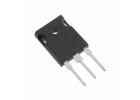
The SFERNICE FIXED RESISTOR, specifically the Vishay Sfernice model RWST30250B2200JB00, is a precision component designed for high-reliability applications such as aerospace, defense, and industrial electronics. To ensure its performance in critical systems, a comprehensive reliability and quality guide must address several key areas. This component typically adheres to MIL-PRF-39009 or similar military specifications, which define rigorous qualifications for power resistors. These standards mandate testing for thermal shock, moisture resistance, and vibration, ensuring the resistor can withstand harsh environments. Additionally, Vishay Sfernice often complies with AEC-Q200 for automotive-grade reliability, which includes extended stress tests like solder heat resistance and high-temperature exposure. Qualification involves lot acceptance testing (LAT) with sample sizes defined by ANSI/ASQ Z1.4, ensuring statistical confidence in batch quality.
Accelerated life testing (ALT) is critical for predicting the long-term reliability of this resistor. ALT typically applies elevated temperatures, such as 85°C to 125°C, with continuous rated power, to simulate years of operation within weeks. Results are analyzed using the Arrhenius model, where the acceleration factor (AF) is calculated based on activation energy (Ea), often assumed at 0.6 to 1.0 eV for thin-film resistors. For example, testing at 125°C with an Ea of 0.7 eV can accelerate aging by a factor of 10 compared to 70°C use. The outcome reveals failure mechanisms like resistance drift or open circuits, guiding design margins. A common pass criterion is less than 1% resistance change after 1,000 hours, indicating stable performance under stress.
Failure rate calculations for the RWST30250B2200JB00 rely on FIT (Failures In Time) rates, defined as failures per 10^9 hours. Using MIL-HDBK-217F, a typical power resistor might have a FIT rate of 1 to 10 at 70°C base temperature, but this varies with applied power and ambient conditions. For instance, derating to 50% of rated power can reduce FIT by half. MTBF (Mean Time Between Failures) is then derived as MTBF = 10^9 / FIT. So, a FIT of 5 yields an MTBF of 200 million hours, though actual field data may differ due to environmental factors. It is crucial to adjust these calculations using temperature rise formulas, as self-heating increases junction temperature and accelerates wear. For procurement, request manufacturer-provided FIT data based on JEDEC JESD74A standards for consistency.
Environmental stress screening (ESS) and burn-in procedures are essential to weed out infant mortality failures. For this resistor, burn-in typically involves applying rated power at 85°C for 100 to 168 hours, with periodic resistance measurements. This exposes early failures due to manufacturing defects like poor solder joints or substrate cracks. ESS may also include temperature cycling from -55°C to +125°C for 10 to 20 cycles, followed by random vibration per MIL-STD-202. These screens should be performed on 100% of units for high-reliability applications, or on sample lots per AQL levels. The goal is to stabilize the resistor’s characteristics before deployment, reducing field returns. Documented results, such as resistance shift data, provide traceability for quality audits.
Counterfeit detection is vital given the ubiquity of Vishay Sfernice parts in the supply chain. For the RWST30250B2200JB00, specific methods include visual inspection for marking inconsistencies—genuine parts have laser-etched codes with precise font and spacing. Use scanning electron microscopy (SEM) to check for material anomalies, such as incorrect substrate composition (alumina vs. beryllia). X-ray fluorescence (XRF) can verify lead-free solder coatings and detect metal substitution. Electrical testing is critical: measure resistance at 25°C and 125°C to compare with datasheet temperature coefficient (typically ±50 ppm/°C). Counterfeit resistors often show drift exceeding 1% under thermal stress. For high-risk lots, perform destructive physical analysis (DPA), such as cross-sectioning to examine resistive element uniformity. Always source from authorized distributors like Mouser or Digi-Key, and request Certificate of Conformance (CoC) with lot traceability.
Incoming inspection best practices should follow a structured protocol. Start with visual and dimensional checks per the datasheet, including body length (30.2 mm for RWST30250) and lead diameter. Use a micrometer to verify package dimensions, as counterfeits often have subtle variations. Electrical tests include resistance measurement at 25°C with a 4-wire Kelvin setup, ensuring tolerance within ±5% (specified as JB00 code). Also, measure insulation resistance between leads and case at 500 VDC, which should exceed 1,000 MΩ. For high-reliability applications, perform a short-duration power test at 1.5 times rated wattage for 5 seconds to detect weak spots. Record all data in a statistical process control (SPC) chart to identify batch trends. Use an AQL of 0.10% for critical defects per MIL-STD-1916.
Storage and handling are crucial to maintain reliability. Store resistors in ESD-safe bags or trays, as static discharge can damage thin-film elements. Humidity must be controlled between 30% and 60% RH to prevent moisture absorption, which can cause corrosion of the resistive layer. Temperature should remain below 40°C, with minimal fluctuations. For long-term storage (over one year), use nitrogen-filled cabinets to prevent oxidation. Handling requires clean gloves to avoid oil contamination, which can cause hot spots during operation. Avoid bending leads too close to the body; use a lead-bending jig to prevent stress on the terminations. Prior to assembly, bake resistors at 125°C for 24 hours to outgas any absorbed moisture, especially for sealed applications.
End-of-life management and obsolescence planning are essential for long-term projects. Vishay Sfernice typically provides product life cycle notifications via their website, with lead times for last-time buys (LTB) often 12 to 18 months. For the RWST30250B2200JB00, monitor for alternate parts like the Vishay Dale series, but verify mechanical fit and electrical specs. Maintain a strategic stock of 5 to 10 years’ consumption for critical systems, with regular rotation to avoid shelf-life issues. If the part is declared obsolete, consider qualified manufacturers list (QML) suppliers for replacement, or design in a form-fit-function alternate. Document all obsolescence risk in a Bill of Materials (BOM) review, and engage with distributors for lifetime buy agreements to secure pricing. For legacy systems, establish a rework and repair plan using NOS (new old stock) from reputable brokers, but with 100% incoming inspection per this guide.