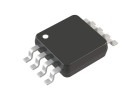
This guide focuses on the MEMS OSC TCXO 26.0000MHZ, specifically the SiTime SKU SIT5156AICFD-30N0-26.000000. This component belongs to the category of timing devices, specifically a Temperature Compensated Crystal Oscillator (TCXO) implemented using Micro-Electro-Mechanical Systems (MEMS) technology. Its primary role in electronic systems is to provide a precise, stable, and low-jitter clock signal at 26.0000 MHz for critical timing applications. This frequency is commonly used in wireless communication modules (like Wi-Fi, Bluetooth, and cellular), GPS receivers, and high-speed data converters where frequency accuracy over temperature is paramount. The TCXO architecture ensures that the output frequency remains stable across a wide temperature range, unlike a standard crystal oscillator which would drift significantly. The MEMS implementation replaces the traditional quartz crystal resonator with a silicon-based MEMS resonator, offering distinct advantages in reliability, size, and environmental robustness.
When selecting a TCXO, several key parameters demand careful evaluation. The most critical is frequency stability, typically expressed in parts per million (ppm) over a specified temperature range. For the SIT5156AICFD, this is often in the range of ±0.5 to ±2.5 ppm, making it suitable for applications like LTE/5G base stations and precision timing. Phase noise and jitter are equally important for high-speed digital and RF systems; low phase noise ensures minimal signal degradation in communications. Supply voltage (3.0V for this SKU) and current consumption must align with power budgets. Output logic type (typically LVCMOS or clipped sine wave) determines compatibility with downstream components. Operating temperature range (often -40°C to +85°C or industrial/automotive grades) must match the end environment. Finally, package size and aging stability are critical for space-constrained designs and long-term reliability. The SIT5156AICFD offers a compact package, often 3.2mm x 2.5mm or similar, which is a key advantage over larger quartz-based TCXOs.
Comparing this MEMS TCXO to its primary alternatives—traditional quartz TCXOs and Oven-Controlled Crystal Oscillators (OCXOs)—reveals important trade-offs. In performance, quartz TCXOs can achieve excellent frequency stability, but they are more sensitive to mechanical shock, vibration, and humidity. MEMS TCXOs like the SiTime SIT5156 offer superior reliability in harsh environments due to the silicon resonator's inherent robustness. They also typically exhibit lower power consumption compared to ovenized solutions. However, the best quartz OCXOs still outperform MEMS TCXOs in ultimate frequency stability (sub-ppb levels) for the most demanding applications like laboratory instruments. In terms of cost, MEMS TCXOs have become highly competitive, often priced similarly to mid-range quartz TCXOs while offering smaller packages and lower power. They are generally cheaper than OCXOs by a significant margin. Regarding availability, MEMS oscillators benefit from a semiconductor supply chain, which can be more scalable than the specialized quartz crystal manufacturing process. This can lead to shorter lead times, though recent global semiconductor shortages have impacted all timing components. The SiTime SIT5156, being a popular SKU, often has better stock availability than niche quartz parts.
Industry trends are strongly favoring MEMS-based timing solutions. The push toward miniaturization in IoT, wearables, and mobile devices drives demand for smaller, lower-profile packages that MEMS can provide. The automotive sector is increasingly adopting MEMS oscillators for ADAS, infotainment, and V2X communication due to their superior vibration and temperature resilience. 5G infrastructure requires ultra-low jitter and frequency stability, which advanced MEMS TCXOs now satisfy at lower power than many quartz alternatives. Additionally, the trend toward supply chain diversification encourages procurement teams to consider MEMS as a second-source option to traditional quartz suppliers. The Internet of Things (IoT) explosion, with billions of connected devices, demands cost-effective, reliable timing that MEMS can deliver at scale. Finally, electrification in industrial and automotive systems demands components that can withstand high electromagnetic interference (EMI), and MEMS oscillators typically offer better EMI immunity than quartz.
You should choose this specific SiTime SIT5156AICFD-30N0-26.000000 over alternatives when your design requires a robust, space-efficient TCXO for applications where mechanical reliability is critical—such as in portable devices, automotive electronics, or industrial equipment subject to vibration. It is also an excellent choice when you need quick time-to-market, as MEMS oscillators often have shorter lead times and are easier to design in due to their wide operating voltage range and standard footprints. If your system operates in environments with significant temperature fluctuations but does not require the sub-ppb stability of an OCXO, this MEMS TCXO provides an optimal balance. Furthermore, if your BOM needs a single sourcing strategy with a reliable, high-volume supplier, SiTime’s manufacturing scale ensures consistent quality. In contrast, if your priority is the absolute lowest phase noise for a specialized RF receiver, a premium quartz TCXO might still be preferable, though the performance gap is narrowing.
From a procurement perspective, several factors are critical for the SIT5156AICFD. Lead times for MEMS oscillators are typically in the range of 8 to 16 weeks, though this can extend during market shortages. It is advisable to check current lead times with your distributor, as SiTime’s semiconductor fab capacity can be subject to demand fluctuations. The component is in an active lifecycle status with strong market demand, and SiTime has a history of product longevity, reducing obsolescence risk. Second-source options are available from other MEMS oscillator manufacturers like Microchip (formerly Micrel and Discera) and Seiko Epson, though pin-for-pin compatibility must be verified. However, SiTime commands the majority of the MEMS timing market, and their products are often the first choice for new designs. It is prudent to secure long-term agreements for high-volume programs and to maintain buffer stock for critical production runs. Always request datasheets and qualification reports to ensure the part meets your system’s specific temperature, vibration, and aging requirements. Finally, consider the total cost of ownership, which includes not just unit price but also reduced failure rates, smaller PCB area, and simplified supply chain logistics compared to quartz-based alternatives.