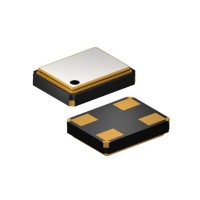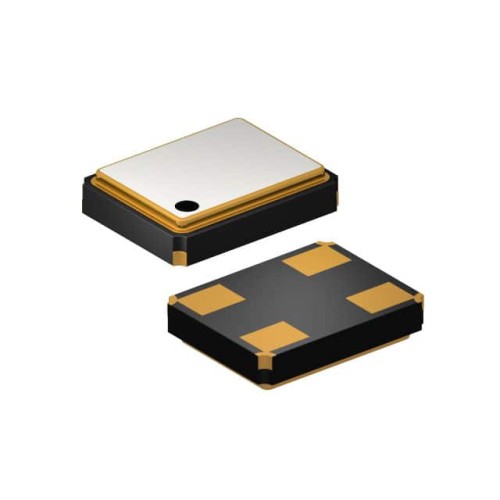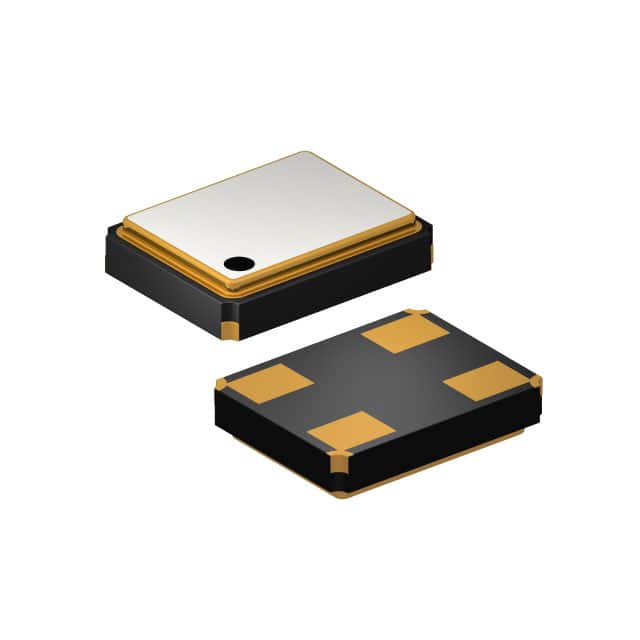
The humble crystal oscillator, often overlooked in the grand narrative of silicon innovation, remains a silent heartbeat for nearly every electronic system on the planet. A specific component, such as the CRYSTAL 32.0000MHZ 12PF SMD from Suntsu Electronics (SKU: SXT22412FC38-32.000MT), serves as a perfect microcosm to understand the broader dynamics of this critical passives segment. This surface-mount device, operating at a precise 32 MHz with a 12 pF load capacitance, is a workhorse for timing applications, and its evolution tells a compelling story about precision, miniaturization, and supply chain resilience.
The technology behind this component is rooted in the piezoelectric effect, where a precisely cut quartz crystal vibrates at a stable frequency when an electric field is applied. Recent innovations in this segment are less about revolutionary physics and more about evolutionary refinement. Manufacturers like Suntsu are leveraging advanced photolithography and chemical etching to produce thinner, smaller blanks that maintain high frequency stability. The shift from through-hole to SMD packaging has been the most significant change, enabling automated assembly and supporting the relentless drive toward device miniaturization. Furthermore, innovations in metalization and hermetic sealing have dramatically improved aging characteristics and temperature stability, allowing these 32 MHz crystals to perform reliably in increasingly harsh environments. The focus is now on reducing Equivalent Series Resistance (ESR) to lower power consumption, a critical factor for battery-powered IoT devices.
Market trends and demand drivers in the crystal oscillator segment are intensely linked to the "everything connected" paradigm. The 32 MHz frequency is a sweet spot for microcontrollers and wireless communication modules. The explosive growth of IoT endpoints—from smart thermostats to industrial sensors—is the primary demand driver. Each node requires at least one timing component for its processor and often a second for the wireless transceiver (e.g., Bluetooth, Wi-Fi, LoRa). The automotive sector, particularly Advanced Driver-Assistance Systems (ADAS) and infotainment, is another voracious consumer, demanding higher reliability grades and wider temperature ranges. The shift from 4G to 5G infrastructure also creates demand for more precise timing, although this often pushes toward higher-frequency TCXOs and OCXOs. Yet, the 32 MHz fundamental mode crystal remains the cost-effective choice for the vast majority of edge devices.
Supply chain dynamics for this component category have been a rollercoaster. Global sourcing for quartz crystals relies heavily on a concentrated base of manufacturers in East Asia, particularly Japan, Taiwan, and China. The post-pandemic era saw severe lead time extensions, stretching from a standard 8-12 weeks to over 30 weeks for many standard parts. While lead times have largely normalized back to the 8-16 week range for commodity SKUs like the SXT22412FC38-32.000MT, the pricing outlook is more nuanced. Raw quartz material costs have stabilized, but energy prices and labor costs in manufacturing hubs remain elevated. We are observing a pricing floor that is approximately 10-15% higher than pre-pandemic levels for standard crystals. The outlook suggests moderate price stability, with potential upward pressure from specialty variants (e.g., AEC-Q200 qualified parts). Procurement teams must recognize that while availability has improved, the era of "just-in-case" inventory is replacing "just-in-time" for these critical passives.
Emerging applications are driving new demand beyond traditional consumer electronics. The most significant is the proliferation of wearable medical devices. Continuous glucose monitors, smart patches, and hearing aids require ultra-miniature, low-power crystals. The 32 MHz frequency is ideal for the system-on-chip (SoC) architectures powering these devices. Another frontier is smart agriculture, where thousands of sensors monitor soil conditions and livestock health. These applications demand robust, low-cost timing solutions that can withstand temperature extremes and humidity. Furthermore, the rise of embedded vision systems in robotics and drones requires precise clock synchronization for camera sensors and processing units, making the 32 MHz crystal a critical component for time-sensitive data capture.
The technology roadmap for this component category is not about replacing quartz, but about augmenting it. We are seeing a bifurcation in the market. For the vast majority of applications, the standard quartz crystal, like the one from Suntsu, will remain the dominant solution due to its optimal cost-performance ratio. However, as devices shrink further, we will see the emergence of MEMS oscillators and even more integrated timing solutions that combine the resonator and oscillator circuit in a single package. For the 32 MHz frequency specifically, the roadmap includes even smaller footprints (e.g., 1612 and 1210 packages) and tighter frequency tolerances (e.g., ±10 ppm instead of ±50 ppm) to support higher-speed data interfaces like USB 3.0 and Gigabit Ethernet in compact form factors.
Impact of industry regulations is a non-negotiable reality. The RoHS (Restriction of Hazardous Substances) and REACH (Registration, Evaluation, Authorisation and Restriction of Chemicals) directives are fully integrated into the manufacturing process for all reputable suppliers like Suntsu. The critical regulation to watch is the AEC-Q200 qualification for automotive-grade components. As more consumer-like electronics enter vehicles (e.g., dashcams, key fobs), procurement must ensure they are sourcing the correct grade. Using a standard commercial crystal in an under-hood application can lead to catastrophic failure. The trend is toward "dual-use" components that meet both commercial and basic industrial standards, but for safety-critical systems, the certified automotive part is mandatory. This qualification adds cost and lead time but is non-negotiable for liability reasons.
Strategic recommendations for procurement teams are clear. First, do not treat a 32 MHz crystal as a simple commodity. It is a long-lead-time-critical component that can halt a production line. Second, implement a dual-sourcing strategy. While Suntsu provides excellent quality, having a second approved vendor for the same footprint and electrical parameters provides leverage and security. Third, engage in early design collaboration. If your design can tolerate a ±50 ppm crystal, do not specify a ±25 ppm one, as the tighter tolerance adds cost and lead time. Fourth, review your inventory buffers. Given the stabilized supply chain, a 12-week rolling buffer is a prudent minimum for this SKU. Finally, pay close attention to the part's date code and storage conditions. Quartz crystals are sensitive to moisture, and proper ESD handling is essential. By treating this small, silent component with the strategic respect it deserves, procurement teams can ensure their products keep beating reliably.